

SponsorWorks isn't selling to small businesses. Their potential customers are some of the biggest organisations in the world. We're talking about major global brands running huge sponsorship, partnership, corporate hospitality and ticketing programmes.
That presents a very different challenge. The audience is smaller. The people are more senior. The organisations are harder to get into. And every relevant lead has the potential to be extremely valuable.
So when Alex and the team at SponsorWorks wanted to use LinkedIn to generate demand from this market, the objective was clear:
Get SponsorWorks in front of the right people inside the right global organisations — and generate as many relevant leads as possible at a sensible cost.
The results:
And some of the highest-performing lead-generation campaigns produced leads for just £13–£15 each.
The Challenge: A Very Small List of Very Big Companies
This wasn't a case of targeting hundreds of thousands of generic business owners. SponsorWorks needs to reach a very specific type of person. Senior people responsible for areas such as:
- Sponsorship
- Partnerships
- Corporate hospitality
- Events
- Ticketing
- Finance and ROI
And critically, they need those people to work inside major organisations capable of running large-scale sponsorship and hospitality programmes.
Think about the scale of organisation associated with the world's biggest consumer brands, airlines, financial institutions and multinational businesses. That's the market.
So simply generating a large number of cheap leads wasn't enough. We needed to generate volume within a very specific enterprise audience.
Step 1: Getting SponsorWorks In Front of the Market
The first job was visibility. Before somebody becomes a lead, they normally need to know you exist.
So we built LinkedIn campaigns designed to repeatedly reach the people SponsorWorks wanted to work with. Over the lifetime of the campaigns, SponsorWorks generated:
That's more than one million opportunities for highly targeted decision-makers to see the SponsorWorks name, messaging and offers.
And because LinkedIn allows us to target using criteria such as company, seniority, role, geography and industry, this wasn't simply one million random advertising impressions. The purpose was to build awareness within the companies SponsorWorks actually wanted as customers.
Step 2: Find the Problems That Actually Make People Respond
The strongest campaigns didn't start by talking endlessly about software features. They started with the problems the audience already had.
Two of the biggest themes we tested were built around very simple issues:
“It's a headache.”
Managing sponsorship, ticketing and hospitality programmes across a large organisation can become complicated quickly.
“We can't clearly prove the ROI.”
Senior teams need to understand what their sponsorship and hospitality programmes are actually producing.
Those pain points became the basis for our lead-generation campaigns. And they worked.
One Campaign Generated 161 Leads at £13.04 Each
One of our strongest campaigns focused on the operational “headache” involved in sponsorship management. The campaign generated:
For an enterprise B2B campaign targeting people inside very large organisations, that's an exceptional volume of leads from one campaign.

Another Generated 179 Leads at £14.47 Each
The second major campaign focused on another common problem: unclear ROI. That campaign produced:
Between those two campaigns alone, SponsorWorks generated:
The important point wasn't simply that we had found an advert that worked. We had identified problems the market cared enough about to exchange their details to learn more.
Step 3: Lead Magnets Did the Heavy Lifting
For a product like SponsorWorks, trying to take somebody from “I've never heard of you” straight to “Book a software demo” can be a big jump. Particularly when you're dealing with large enterprises.
There can be multiple stakeholders. Long buying cycles. Internal processes. Budgets. Existing systems. And people who aren't necessarily looking for new software today.
So we gave them another way into the funnel. Useful content.
Instead of every campaign asking prospects to speak with sales immediately, we created lead-generation campaigns around subjects that were already relevant to SponsorWorks' target market.
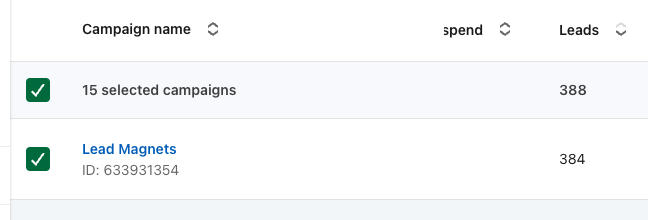
Across the main Lead Magnet campaign:
This gave SponsorWorks hundreds of relevant people who had actively identified themselves as interested in the problems their software solves.
Step 4: Don't Treat Every Lead Like They're Ready to Buy Tomorrow
This is particularly important with enterprise marketing. Someone downloading a guide doesn't necessarily mean:
“I want to buy your software today.”
But it does mean something. They've seen SponsorWorks. They've recognised a problem. They've engaged with the brand. And they've given us permission to continue the conversation.
That's enormously valuable when your potential customers are some of the largest companies in the world.
Those people can then become part of the wider SponsorWorks funnel through:
- LinkedIn retargeting
- Further educational content
- Customer stories
- Direct offers
- Email nurturing
- Sales follow-up
- Demo campaigns
The first conversion isn't necessarily the sale. It's often the beginning of the relationship.
More Than Just Lead Generation
One of the things we particularly like about this account is the scale of awareness generated alongside the leads. Across the account:
That means SponsorWorks didn't simply purchase a list of names. They generated more than one million targeted brand impressions amongst the market they want to dominate.
Hundreds of people took the next step and became leads. Thousands clicked. And many more will now recognise the SponsorWorks name when they encounter the business again.
That's the part of LinkedIn advertising that's difficult to see if you only look at the final lead form.
Enterprise LinkedIn Ads Don't Have to Cost Hundreds Per Lead
There's a common assumption with LinkedIn:
“It's expensive.”
And yes, it absolutely can be. Particularly if you take an extremely senior enterprise audience and immediately bombard them with:
BOOK A DEMO. SPEAK TO SALES. BUY OUR SOFTWARE.
But SponsorWorks demonstrates what can happen when you give the audience a relevant reason to engage first. Our two biggest campaigns generated:
That's while marketing a specialist B2B product designed for major organisations. The difference is the offer.
What Made the SponsorWorks Campaign Work?
There wasn't one secret LinkedIn setting. There were several things working together.
Extremely clear targeting
We knew the type of companies and decision-makers SponsorWorks wanted.
Pain-point-led creative
We didn't lead with a giant list of product features. We started with problems people actually recognised.
Low-friction offers
Prospects didn't have to be ready for a sales conversation to interact with SponsorWorks.
Lead magnets
We created a reason for people higher up the buying journey to identify themselves.
Scale
Once we found campaigns that worked, we allowed them to keep producing results rather than constantly changing things for the sake of it.
And ultimately:
We matched the right message to the right people at the right stage of the buying journey.
388 Leads From Some of the Hardest Companies in the World to Reach
This is what makes the SponsorWorks campaign stand out for us. Generating leads is one thing. Generating them when your addressable market is made up of senior people within enormous multinational organisations is another.
The final account numbers speak for themselves:
And individual campaigns generating leads for as little as £13.04.
LinkedIn gave SponsorWorks something very difficult to replicate elsewhere:
Direct access to the exact companies and people they wanted to reach.
We built the campaigns around that opportunity.


